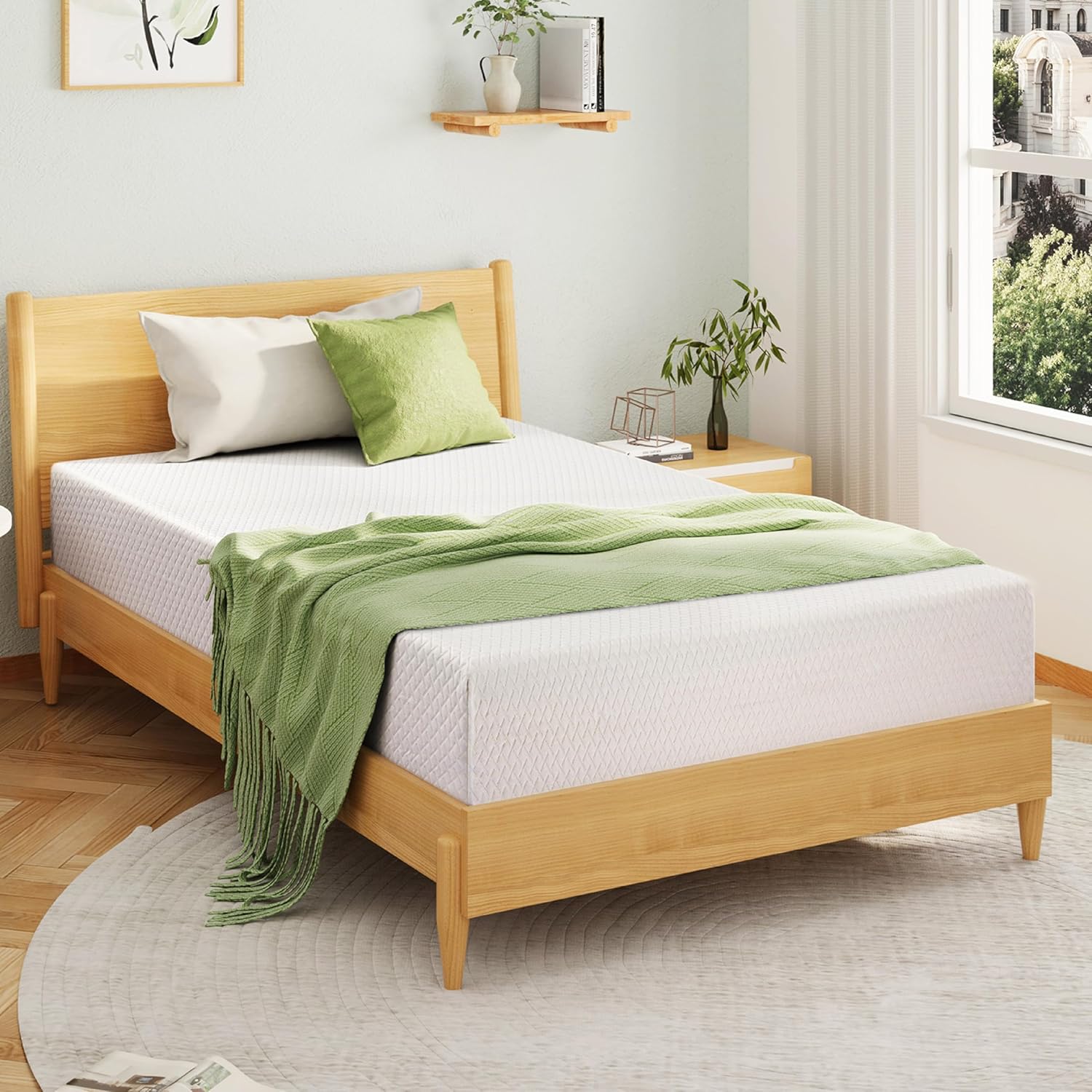
Memory foam contours closely to the body, relieving pressure and isolating motion, which suits side sleepers and couples. The trade-off is that it can trap heat and make changing position harder.
- Density. Higher-density foams are generally more durable and supportive; lower-density foams feel softer and cost less.
- Cooling. Gel-infused, copper-infused or open-cell foams and breathable covers aim to reduce heat build-up. Results vary, so hot sleepers may also consider hybrids.
- Firmness. All-foam beds range from plush to firm; match firmness to your sleep position.
- Certifications. CertiPUR-US certifies foams for content, emissions and durability.
Boxed foam mattresses need time to expand fully after unboxing; follow the manufacturer's timing. A new-foam smell is common and usually fades with ventilation. Use a solid or closely slatted base to support the foam evenly.